Friedrichshafen is known worldwide as the birthplace of the Zeppelin and remains closely associated with technology and innovation to this day. A look at the municipal wastewater treatment plant shows that sophisticated technology is also required in a very different field. Since 2021, the entire wastewater flow has been treated with an ozone system for micropollutant removal before being discharged into Lake Constance – under conditions that can change very rapidly depending on the weather.
On dry days, the plant treats an average of around 25,000 cubic metres of wastewater, while during wet weather the daily influent flow can rise to 79,000 cubic metres. The key challenge is not only the wide variation between dry- and wet-weather conditions, but above all the speed at which operating conditions can change. “Depending on the weather conditions, influent flow can vary by a factor of around ten. During heavy rainfall, this change can take place within only about 15 minutes,” explains Michael Grob, Head of Wastewater Treatment and the Wastewater Treatment Plant at the City of Friedrichshafen. Designed for 87,500 population equivalents, the plant therefore has to handle very different operating conditions flexibly and reliably.
When biological treatment has to respond quickly to changing loads
A sudden increase in influent flow changes not only the hydraulic load. Significant load peaks can occur at the same time. Process control, blower capacity, air distribution and aeration therefore have to work together very closely. The aim is to maintain the hydraulic retention time in the biological treatment stage for as long as possible while ensuring the required oxygen supply.
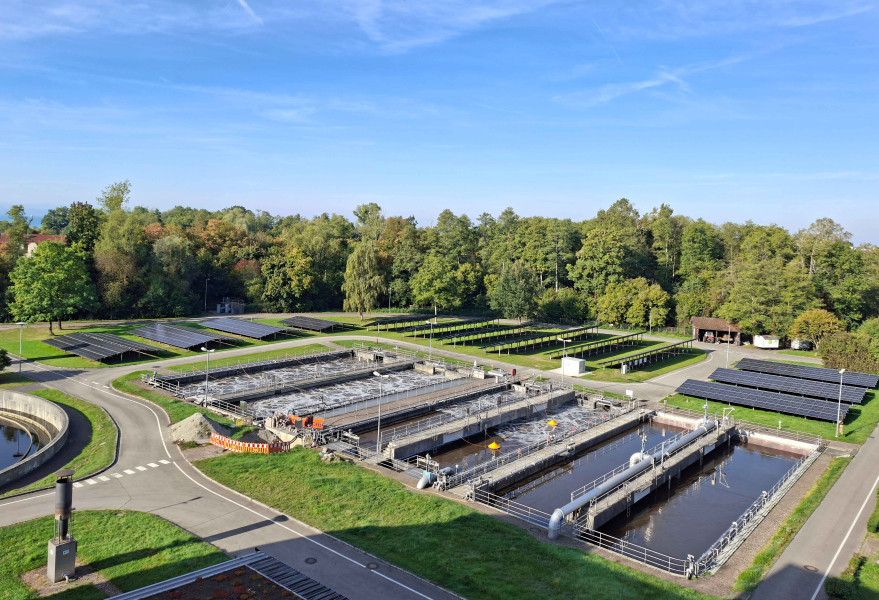
The operating concept in Friedrichshafen is designed accordingly. Four aeration tanks with a total of eight cascades make it possible to respond specifically to changing loads. When a load peak occurs, additional blower capacity must be made available within a short period and transferred into the tanks as efficiently as possible. Aeration plays a key role in this process. “The AEROSTRIP® diffusers provide us with a highly flexible air supply within this concept,” Grob explains. “This allows us to direct the available blower capacity specifically to the tanks where it is actually needed without unnecessarily having to switch additional tanks from denitrification.”
One of the key advantages of AQUACONSULT’s strip diffusers is their wide operating range. This allows the air supply to be flexibly adapted to the plant’s rapidly changing requirements – from comparatively low base loads to high airflows during load peaks. “This wide range is particularly important to us because we have to operate the diffusers under very different conditions. Depending on the operating situation, the blowers provide between approximately 1,200 and 20,000 Nm³/h of air, which is then flexibly distributed between the different tanks.”
Long-term experience as the basis for further modernization
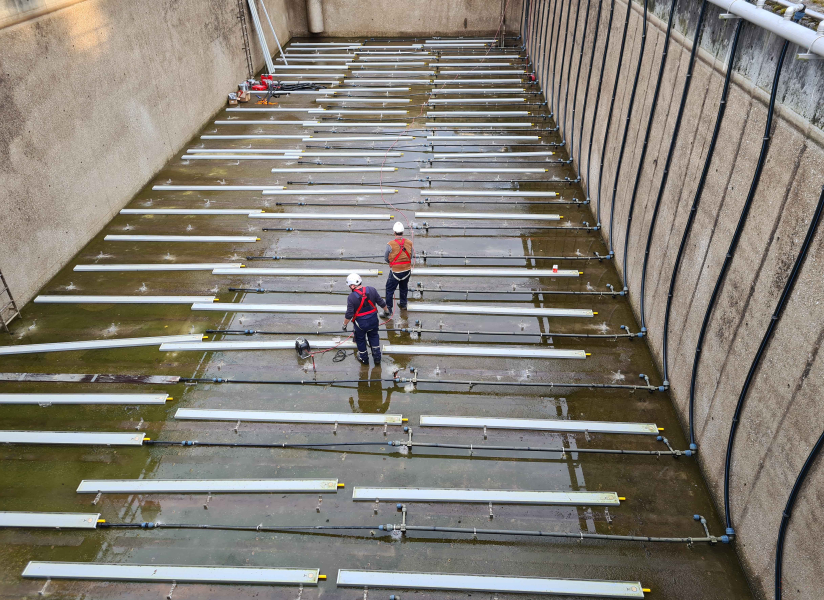
Friedrichshafen’s experience with AEROSTRIP® dates back to 2000, when two aeration tanks were first equipped with Type T strip diffusers. In 2021, these were replaced by Type Q. In 2025, further sections of the biological treatment stage, which had previously been equipped with plate diffusers, were converted. Today, all aeration tanks as well as the SBR system are equipped with AEROSTRIP® Type Q.
For Grob, the decisive factors were not only the positive experience gained over many years of operation, but above all the specific requirements of the plant. “Our diffusers must not only perform efficiently at one optimum operating point, but across as wide a range as possible,” he emphasizes. “Since we had already had positive experience with AEROSTRIP® strip diffusers, we gradually expanded the system to additional tanks and ultimately decided to equip the entire biological treatment stage with the technology.”
Integrated optimization of aeration and energy supply
The diffuser conversion forms part of a comprehensive modernization of both the biological treatment stage and the plant’s energy supply. In addition to the AEROSTRIP® diffusers, the existing blowers were replaced with highly efficient turbo blowers. At the same time, the air control valves were renewed, the air piping was adapted and the measurement technology was significantly expanded. The aim was not only to improve oxygen transfer, but to operate the entire aeration system as efficiently and precisely as possible.
A further major step has recently been implemented with the conversion to cascade denitrification. This allows the biological treatment process to respond even more precisely to different load situations, reduces the electricity required for recirculation and improves nitrogen removal.
Efficient and reliable in day-to-day operation
Several measures to optimize biological treatment and energy efficiency were therefore implemented simultaneously in Friedrichshafen as part of the modernization, making it impossible to assess the energy effect of the diffusers in isolation in detail. “The individual components work together as an integrated system,” Grob explains. In day-to-day aeration operation, however, the AEROSTRIP® diffusers demonstrate consistent backpressure and very good oxygen transfer efficiency. The renewed air control valves, optimized air piping and adapted blower technology have also helped to keep backpressure within the air system low.
From the operator’s perspective, the significantly lower susceptibility to clogging is another particularly positive aspect. In addition, pulse and sharing operation enable flexible use of the available blower capacity. “One major practical advantage for us is that we have much less concern about supplying a tank with either too much or too little air,” Grob summarizes. “This gives us additional flexibility in day-to-day operation and makes it easier to deal with rapidly changing load conditions.”
From power consumer to power producer
The technical optimization of the biological treatment process forms part of an even more comprehensive energy strategy at Friedrichshafen Wastewater Treatment Plant. By combining co-digestion, photovoltaic systems, on-site power generation and intelligent load management, the plant has increasingly evolved from a conventional electricity consumer into an electricity producer.
“Already in the first year following the implementation of our energy management system, Friedrichshafen Wastewater Treatment Plant can be described as almost energy-neutral on an annual balance basis,” says Grob. The decisive factor is not one individual measure, but the interaction of several systems: renewable on-site electricity generation from photovoltaics, the energy recovery from biogas generated through co-digestion, and intelligent load management ensure that as much of the electricity generated as possible is used on site and that electricity drawn from the grid is reduced. A planned battery storage system is intended to further complement this concept in the future. “For us, this is an important step because we no longer see the wastewater treatment plant exclusively as a major energy consumer, but increasingly as a decentralized energy producer and a flexibly controllable energy site,” Grob emphasizes.
From first installation to long-term partnership
Over the years, the gradual conversion has been accompanied by intensive technical consulting and the adaptation of the aeration system to the respective process requirements. “Our cooperation with the wastewater treatment plant in Friedrichshafen is a particularly good example of a long-term partnership,” says Rüdiger Vrabac, Head of AQUACONSULT Anlagenbau GmbH Germany. “The plant places high demands on flexibly controllable aeration. The fact that the use of our technology has been expanded over the years to cover the entire biological treatment stage is a strong endorsement of our technology and of the trust that has grown over many years.”
Beyond Friedrichshafen, AEROSTRIP® technology is now used worldwide: more than 2,500 municipal and industrial wastewater treatment plants operate with the strip diffusers developed in Traiskirchen. Major references in Germany include the “Alte Emscher” wastewater treatment plant in Duisburg, one of the largest wastewater treatment plants in the country, as well as the Zweibrücken wastewater treatment plant in Rhineland-Palatinate. Internationally, the technology is used in all three wastewater treatment plants in Copenhagen as well as at the Western Treatment Plant in Melbourne, Australia.
Photos:
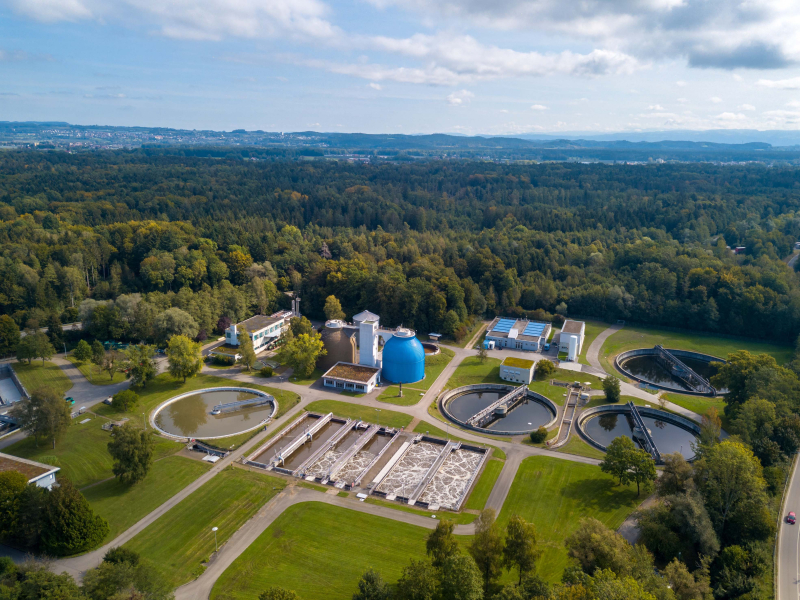
1. Friedrichshafen Wastewater Treatment Plant on Lake Constance has to cope with enormous fluctuations in influent flow: during heavy rainfall, the incoming wastewater volume can increase tenfold within only 15 minutes. (Photo: City of Friedrichshafen)
2. At the heart of the biological treatment process are four aeration tanks. The flexible operating concept makes it possible to respond specifically to rapidly changing loads. (Photo: City of Friedrichshafen)
3. During the 2025 modernization, further sections of the biological treatment process were equipped with AEROSTRIP® strip diffusers. Today, the technology is used in all aeration tanks at Friedrichshafen Wastewater Treatment Plant. (Photo: AQUACONSULT)
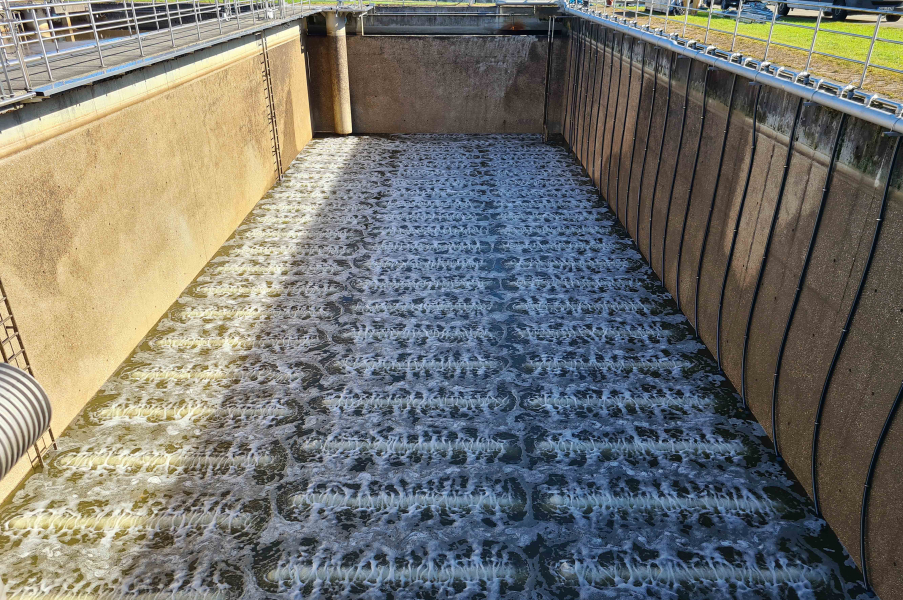
4. AEROSTRIP® in operation: fine bubble aeration ensures efficient oxygen transfer and can be adapted across a wide operating range to the changing loads at Friedrichshafen Wastewater Treatment Plant. (Photo: AQUACONSULT)
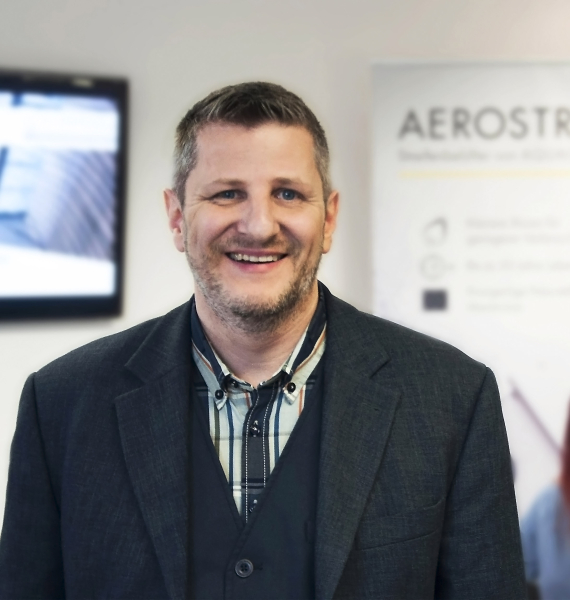
5. “The plant in Friedrichshafen places high demands on flexibly controllable aeration. The fact that the use of our technology has been expanded over the years to cover the entire biological treatment stage is a strong endorsement of our technology.” Rüdiger Vrabac, Head of AQUACONSULT Anlagenbau GmbH Germany (Photo: AQUACONSULT)
AEROSTRIP® strip diffusers from AQUACONSULT Anlagenbau GmbH are currently in use in more than 2,500 industrial and municipal wastewater treatment plants worldwide. Thanks to ongoing research and development work and regular performance tests, the strip diffuser manufactured by AQUACONSULT under the name AEROSTRIP® can today be regarded as one of the most efficient representatives of fine-bubble deep diffusers. The AEROSTRIP® is manufactured exclusively at the company's Austrian headquarters in Traiskirchen (Lower Austria), where around 40 people are employed. AQUACONSULT Anlagenbau GmbH was founded in 1986 as a manufacturer of fine-bubble deep diffusers and became part of SANKI Engineering Co., Ltd. in 2006. AQUACONSULT's international partner companies have extensive engineering expertise and experience in aeration technology. A list of all international sales partners can be found on the product website www.aerostrip.at, information on AQUACONSULT can be found at www.aquaconsult.at

Contact:
AQUACONSULT ANLAGENBAU GMBH
Badener Straße 46
A-2514 Traiskirchen
+43-2252 41 481-0
office@aquaconsult.at
www.aerostrip.at